
The loop
Play the song, hold the room, get in the van
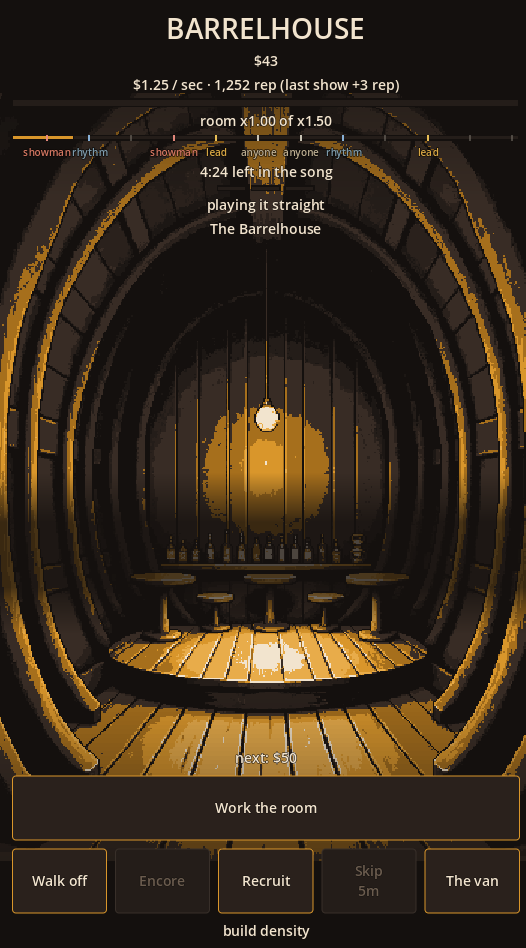
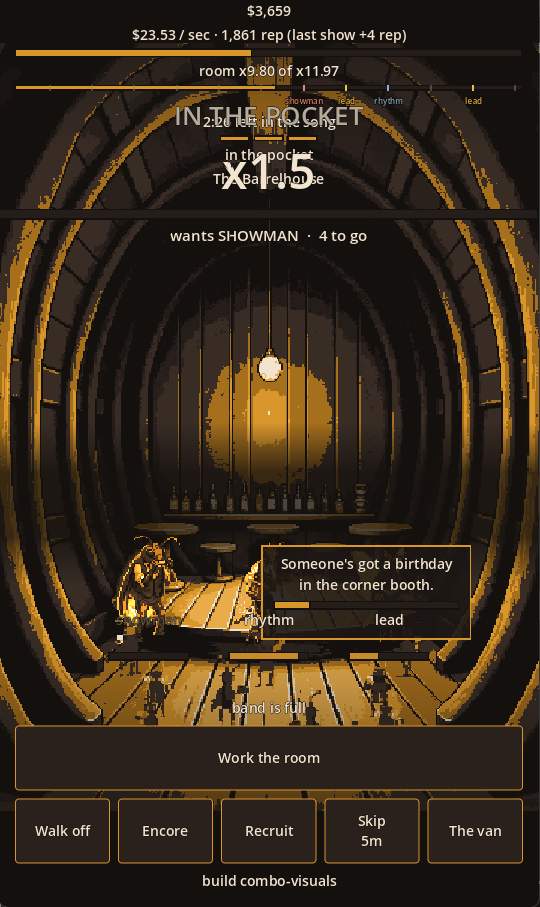
A show is a song, not a timer. Five minutes, twelve choruses, and eight of those turns deal you a beat: something happens in the room and it wants one instrument. The lead, the rhythm, the showman, or anyone. You can see each one coming, because the song bar carries a tick where it will land and the tick says what it will ask for.
Answering costs stamina, and stamina is an allowance rather than a clock. Spend a player and they sit out the rest of the song. Spend everybody and the night is over. So the decision is never really which instrument, it is whether you can afford the one the room is asking for.
Hold the pocket deep enough and the song turns into a run: beats land on bar tops rather than chorus tops, twelve times denser, and a combo builds while you keep answering. Miss one and it is gone.
Then you walk off, bank Reputation, and spend it on the van before the next show. Past the van there is a venue ladder that never stops: six hand-authored rooms behind six rungs, then a composed town and room name forever after.
Screenshots
What it looks like
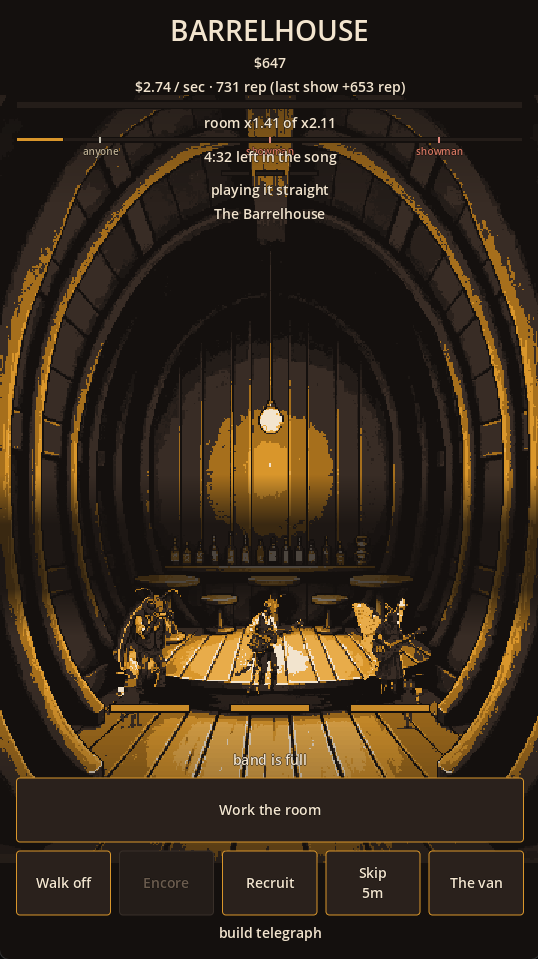
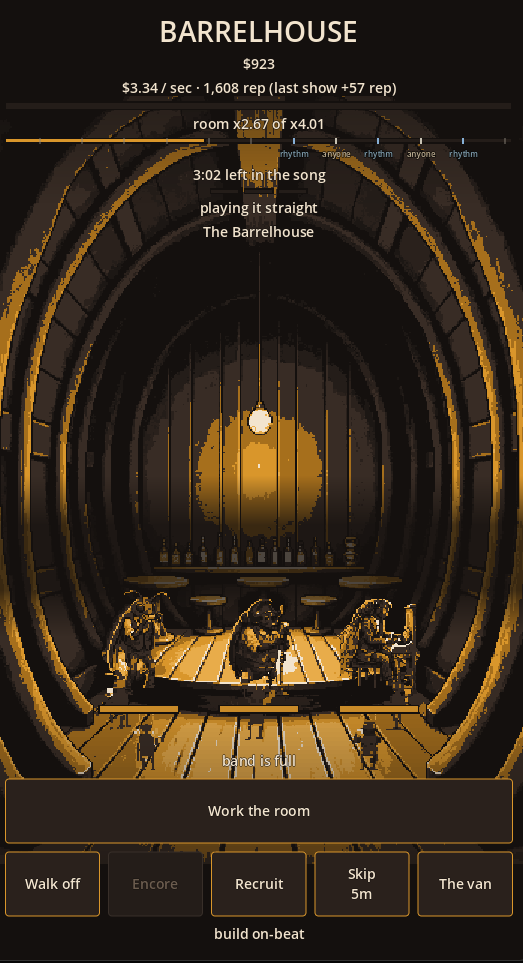
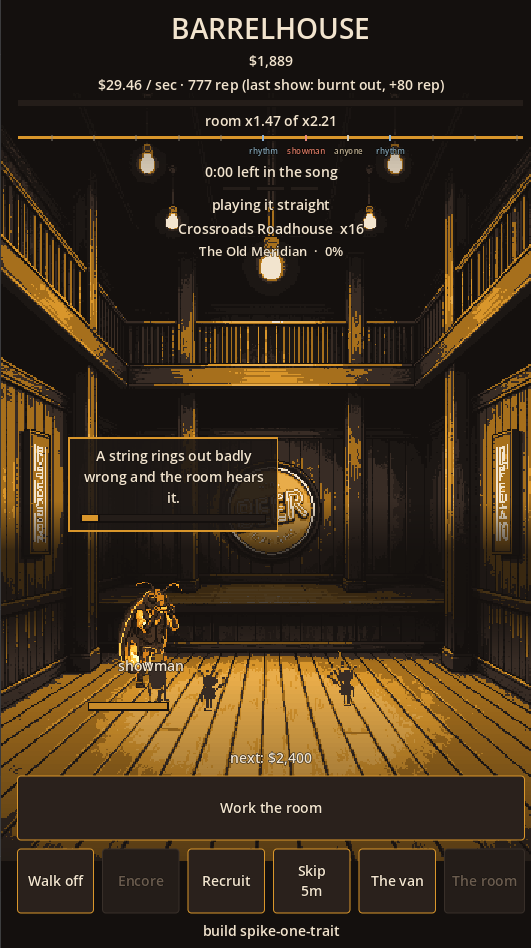
Captured on the desktop build. It is a portrait game and it is built for a phone.
Under the hood
What is actually built
The show works, the room is drawn, the economy is tuned, and the thing it has been missing for five rounds is fun rather than features. The mechanics board says where every piece stands, including the parts that came back from a playtest as no.
A note on the name
Barrelhouse, not Roadhouse
The repository is still called Roadhouse, and so are the assembly, the test namespace and the Android package id. That is on purpose. A package id is permanent from the first upload, so renaming the code to match the game buys nothing and risks a rename somebody half finishes. The game is Barrelhouse. The room it happens in is a roadhouse.